

医护人员采访
Medical Staff Interviews
对精神康复群体的现场观察
A Field Observation on a Psychiatric Rehabilitation Community
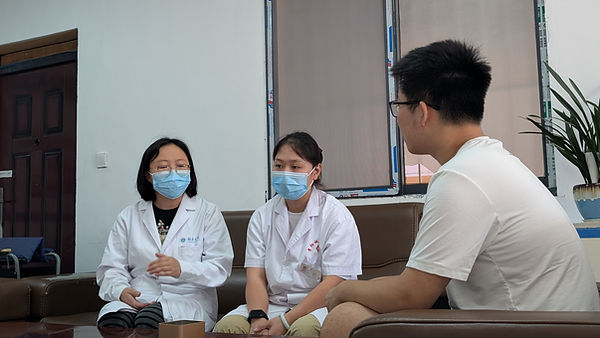
位于贵阳市郊的林东精神康复医院,是一所综合性精神卫生机构,收治来自全省各地的患者。六病区是这里的长期康复区,住着数百位病人,其中不少人已在此生活多年。
在采访当天的上午,医生与护士正轮流查房。走廊两侧是相似的病房:铁栏窗、瓷砖地面、白色墙壁。空气里有消毒水的气味,阳光透过窗户照进来,显得明亮而安静。
六病区的主治医生周医生介绍,这里的病人多数来自经济条件较差的家庭。“大概95%以上的家庭经济紧张,很多人长期无人探望。”据他回忆,有的家属最初会定期探视,后来慢慢就不再出现,除非患者突然身体不适才会被通知来院。
护士则表示,她最深的体会是病人普遍缺乏情感支持。“医院能提供吃、住、药物治疗,但他们真正需要的是家人的关注。”有的病人每天都在等电话,或者问“什么时候有人来看我”,但这样的期待往往落空。
由于精神障碍具有长期性和反复性,部分患者的家庭已经难以继续承担照护责任。医生坦言:“有些人曾在发病时伤害过家人,那种阴影家属很难消化。”因此,对不少家庭来说,让病人长期住院成了一种“相对安全”的选择。
医院的收费相对低廉,是省内较少数能够长期收治的机构之一。“对家属而言,这里性价比高,也放心。”周医生说,但他同时承认,这也让医院逐渐成为一些病人的“最终去处”。
谈及政府和社会的支持,他表示,医保和困难补助虽有覆盖,但仍存在落实不到位的情况。“如果能让医院代为管理部分资金,会更有利于保障患者的日常生活。”
在社会参与方面,志愿者活动相对较少。护士解释,主要原因是安全和隐私考虑。“很多病人拒绝外人接触,或者家属担心被外界知道。”不过,每逢节日,仍有爱心组织送来衣物、水果等生活物资。
医院内部正在进行基础改造,增加热水设备、健身器材和公共活动区。工作人员希望通过改善环境,让病人的康复过程更加有序和人性化。
在这里,时间的流动变得缓慢。每天的生活由服药、用餐、活动和休息构成。对于许多病人而言,这里既是治疗场所,也是他们长期生活的地方。
医生说:“我们都希望他们能好起来,重新融入社会。但现实是,即使好转之后,他们能去的地方并不多。”
Located in the suburbs of Guiyang, Lindong Psychiatric Rehabilitation Hospital is a comprehensive mental health institution that admits patients from across the province. Hundreds of residents stay here, many of whom have lived there for years.
On the morning of the interview, doctors and nurses were conducting their routine ward rounds. The corridor was lined with identical rooms: barred windows, tiled floors, and white walls. The smell of disinfectant lingered in the air, and sunlight streamed through the windows, filling the space with a quiet brightness.
Dr. Zhou, the attending physician of Ward Six, explained that most patients come from economically disadvantaged families. “About 95% are under financial strain, and many have not been visited for a long time,” he said. “Some families came regularly at first, but eventually stopped—unless something urgent happens.”
A nurse shared that what struck her most was the patients’ lack of emotional support. “We can provide food, housing, and medication, but what they really need is attention from their families,” she said. “Some patients wait every day for a phone call or ask, ‘When will someone come to see me?’—but that hope is often unmet.”
Because mental disorders are often chronic and relapsing, many families struggle to provide long-term care. “Some patients once hurt family members during an episode, leaving trauma that’s hard to heal,” Dr. Zhou admitted. “For many families, long-term hospitalization becomes the ‘safest’ option.”
The hospital charges relatively low fees, making it one of the few institutions in the province capable of providing long-term care. “For families, it’s affordable and reassuring,” Dr. Zhou noted. “But that also means the hospital has, for some, become their final place of residence.”
Regarding government and social support, he acknowledged that while medical insurance and subsidies exist, implementation can be inconsistent. “If hospitals could manage some of the patients’ funds directly, it would help ensure their daily needs are met,” he suggested.
Volunteer activities are relatively rare, mainly due to privacy and safety concerns. “Many patients reject contact with outsiders, or their families fear social stigma,” a nurse explained. Still, during major holidays, charitable groups bring clothing, fruit, and other daily necessities.
The hospital is currently undergoing renovations—adding hot water facilities, fitness equipment, and common areas. Staff members hope that improving the environment will make rehabilitation more structured and humane.
Here, time seems to move slowly. Each day is shaped by medication, meals, activities, and rest. For many residents, the hospital is not only a place of treatment but also the world they inhabit long-term.“
We all hope they’ll recover and reintegrate into society,” Dr. Zhou said. “But the reality is, even when they improve, there are very few places they can go.”