

Re: Connect
Lindong
Projects
由于长期住院,精神康复患者无法使用手机、电脑或其他电子设备。RE:Connect 致力于帮助他们重新建立与世界的联系——让他们能够获取外部信息,同时也将他们的故事分享给更广泛的公众。
Due to long-term hospitalization, psychiatric rehabilitation patients are unable to use phones, computers, or other electronic devices. RE:Connect aims to help them rebuild their connection with the world — enabling access to outside information while also sharing their stories with a wider audience.

书籍募捐与阅读伴侣
Book Donation &
ReadingCompanion
在林东医院精神康复病区,阅读是患者与外部世界保持联系的重要方式。由于长期住院,他们无法使用电子设备,也难以接触到新的书籍。RE:Connect Lindong 发起了图书捐赠计划,在病区设立阅读角,让书籍成为通往外界的窗口。
目前,我们通过筹资共捐献了 60 余本书籍,总价值约 人民币 2000 元,面向 14 至 60 岁 不等的患者群体。书籍类型涵盖 童话、英文学习、小说、通俗读物、历史 等多个领域,既带来知识与想象,也成为他们心灵复健的陪伴。
我们会不定期与病人聊天,了解他们的阅读兴趣与喜好,并据此准备相应的书籍。在交流中我们也发现,部分病人由于没有接受过系统教育,文化程度较低,存在识字困难的情况。
为此,我们在书籍选择与陪伴阅读中加入了更多包容性的设计:
-
选取插图丰富、语言简洁的书籍,如童话、绘本和中英双语读物;
-
鼓励医护人员与志愿者进行“共读”,通过朗读、讲述与对话的形式帮助患者理解内容;
-
在阅读角设置“分享卡”,让患者可以用绘画或简短的文字记录读后感受。
我们希望阅读不只是获取信息的手段,而是一种重新认识世界、重建信任与自我表达的过程。
In the psychiatric rehabilitation ward of Lindong Hospital, reading is one of the few ways patients can stay connected with the outside world. Due to long-term hospitalization, they are unable to use electronic devices and have limited access to new books. RE:Connect Lindong launched a Book Donation Program, establishing a small reading corner where books serve as a window to the world beyond.
So far, we have raised funds to donate over 60 books, worth about 2,000 RMB, to patients aged 14 to 60. The collection covers a wide range of genres, including fairy tales, English-learning materials, novels, popular nonfiction, and history books, bringing both knowledge and imagination, as well as companionship during recovery.
We regularly chat with patients to learn about their reading interests and select books accordingly. Through these conversations, we also discovered that some patients, having received little formal education, face challenges with literacy.
To make reading more inclusive, we introduced several supportive measures:
-
Selecting illustrated and easy-to-read books such as picture books, bilingual readers, and simple stories;
-
Encouraging medical staff and volunteers to read together with patients, helping them understand through storytelling and dialogue;
-
Providing “sharing cards” in the reading corner, where patients can express their thoughts through drawings or short reflections after reading.
We hope that reading can be more than a way to acquire information — that it becomes a process of rediscovering the world, rebuilding trust, and expressing the self.
故 事 收 集
Story Collecetion
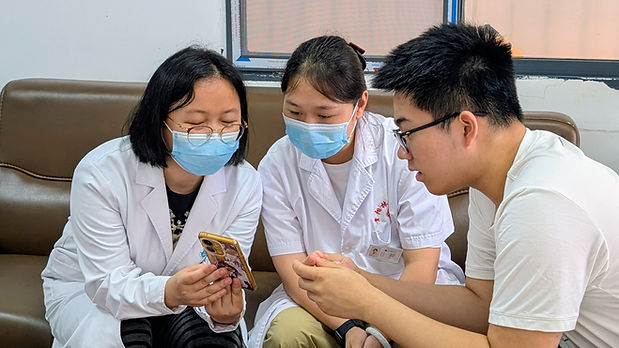
在与精神康复患者的长期交流中,我们开始收集他们的故事。那些故事有时平静得像日常的对话,有时则带着被压抑已久的情绪。我们记录下他们的经历、回忆与想法——关于他们为何来到这里、他们失去过什么,又在努力寻找什么。
这些声音往往被忽视,而我们希望通过倾听与整理,让他们重新被看见。每一段叙述都是一次自我表达的尝试,也是他们重新理解世界的过程。
我们将部分故事整理为文本、影像与声音档案,用以呈现精神康复群体的真实面貌,促使更多人理解他们、靠近他们。
Through ongoing conversations with psychiatric rehabilitation patients, we began to collect their stories. Some are as calm as everyday talks; others carry emotions long kept silent. We listen and record their experiences, memories, and reflections — how they came here, what they lost, and what they are striving to find again.
These voices are often unheard. By documenting them, we hope to make them visible — each story a quiet act of self-expression, a step toward rediscovering one’s place in the world.
The collected narratives are curated into written, visual, and audio archives, revealing the human reality behind psychiatric rehabilitation and inviting the public to understand and connect with this community.

心灵树 Heart Tree
心灵树设计说明
The Design of the “Heart Tree”
设计理念
“心灵树(Heart Tree)”是我为精神康复病区患者设计的一款交互式情绪记录与陪伴装置。灵感来源于病区花园里的那棵树——它安静、生长、始终在场。我希望用AI和在线数据库等科技手段模拟一种温柔的陪伴- 让树成为一个倾听者和连接患者与世界的媒介。
树的每一盏“果实灯”代表一次心情的波动。
当患者与装置对话时,系统会通过语音识别与情绪分析算法,将语气特征和表情变化转化为色彩信号:
-红灯代表负面情绪(焦虑、悲伤、孤独)
-绿灯代表积极情绪(平静、愉悦、希望)
这棵树在不断的光变中,像是在与人一起呼吸。
“心灵树”不仅是情绪的映射,也是社会连接的象征——它让原本孤立的空间,重新被光与互动连接起来。

Design Concept
The “Heart Tree” is an interactive installation designed for patients in the psychiatric rehabilitation ward. It serves as both an emotional recording device and a companion. The inspiration came from a real tree in the hospital garden — quiet, ever-present, and growing at its own rhythm. I wanted to use technologies such as AI and online databases to simulate a gentle form of companionship — to make the tree a listener and a bridge connecting patients to the outside world.
Each “fruit light” on the tree represents a fluctuation of emotion.
When patients talk to the installation, the system employs speech recognition and emotion analysis algorithms to convert vocal tone and facial expressions into color signals:
-
Red lights indicate negative emotions (anxiety, sadness, loneliness).
-
Green lights represent positive emotions (calmness, joy, hope).
Through these changes of light, the tree seems to breathe alongside its users. The “Heart Tree” is not only a reflection of emotion but also a symbol of connection — transforming an isolated space into one re-linked by light and interaction.
设计细节
外形结构:以钢丝与柔性塑料为主支架,模仿树干与分枝结构,高约 1.8 米, 占地4平方米, 适配病区活动空间。整体可拆装, 利于设备安装和维修.
照明系统:采用可编程 WS2812 LED 灯珠,分布在枝条末端的软塑料果实当中。
电源与控制:由树莓派微控制器驱动,通过在线调用语音和情绪识别模型: 语音信号和病人表情经模型分析后转化为电压控制信号,改变灯光色彩与亮度。
交互功能:内置麦克风与扬声器模块,可进行语音输入输出, 支持实时语音反馈.配合隐藏摄像头进行每日情绪记录。
具备联网功能,可播放简短新闻、音乐或故事,让患者在对话中接触院外信息。
替换设计: 产品使用分组布线发, 每八个果实灯为一组, 连接于专门设计的接线板上. 单个果实和接线板均是经过定制设计的小型可插拔模块, 方便普通工人进行维修和安装.

Structural Details
Form and Structure
Constructed mainly with steel wire and flexible plastic, the tree mimics natural branches and stands about 1.8 meters high, covering 4 square meter of floor space — suitable for ward activity areas. The structure is modular and detachable for easy installation and maintenance.
Lighting System
Programmable WS2812 LED beads are embedded in soft plastic “fruits” at the ends of the branches.
Power and Control
Driven by a Raspberry Pi microcontroller, the system runs online speech and emotion recognition models. Voice tone and facial cues are converted into voltage signals that alter the lights’ color and brightness.
Interactive Features
The tree includes built-in microphones and speakers for two-way voice interaction, providing real-time feedback. A concealed camera records daily emotional data. With internet connectivity, the device can also play short news clips, music, or stories — allowing patients to access information from outside the hospital.
Modular Design
The wiring system groups every eight “fruit lights” into a replaceable unit connected to a custom circuit board. Each light and board is a small plug-in module, allowing ordinary maintenance staff to repair or replace parts easily.
特殊处理
材料选择:外壳为柔性塑料与轻质木板结合,保证安全与触感, 同时防止病人接触过程中划伤或磕碰.
底座设计: 设有嵌合型方形底座稳固结构, 底座使用膨胀螺丝固定在地上, 防止产品倒塌造成伤害.
隔离设计: 使用木制护栏在近树周围设立防护以防止病人攀爬. 产品使用期间有专门的医护人员在监控内监督使用.
电路规划: 使用天花板吊线设计, 电线, 主机和其他电子原件均从墙内暗线引导, 放置在产品的树冠处的软塑料鸟巢内, 电线直接连接病区天花板, 防止病人触碰.
Safety and Special Considerations
Materials
A combination of flexible plastic and lightweight wood ensures both safety and tactile warmth, reducing the risk of scratches or collisions.
Base Design
A square embedded base secured with expansion screws stabilizes the structure, preventing accidental tipping.
Protective Barrier
A wooden guardrail surrounds the installation to prevent climbing.
During use, medical staff monitor the area for safety.
Circuit Planning
All wiring is routed through the ceiling; the main controller and electronic components are enclosed in a soft plastic “nest” at the top of the tree.
The concealed wiring connects directly to the hospital’s ceiling outlets, ensuring patients cannot touch any live components.


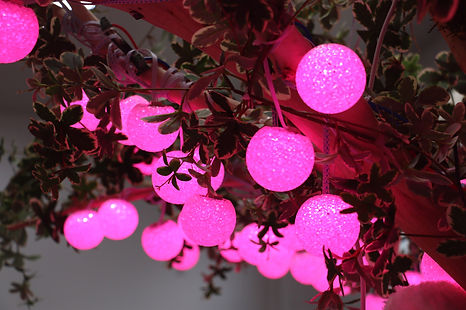
待机状态的下灯光颜色变化
Color transitions of the LED lights in standby mode


用户反馈
Feedback
可以和树互动聊天挺有趣的!就是反应还有点慢(笑)
It’s fun to chat and interact with the tree! It’s just a bit slow to respond (laughs).
—— 钟哥
“可以帮助我们监测病人的情绪,这一点很有意义。之后我们还要教会更多病人使用它进行简单的对话。”
“It can help us monitor patients’ emotions, which is very meaningful. Next, we plan to teach more patients how to use it for simple conversations.”
——吴医生
“颜色会变,很好看!”
The colors change — it looks beautiful!
—— 赵姐 Aunt Zhao
“住院生活挺无聊的,谢谢你给我们带来了新的设施”
Life in the hospital can be quite boring. Thank you for bringing us something new.
—— 小张 Xiao Zhang